The first core exercise I teach isn't a crunch. It isn't a plank, either. It's a breath.
I know. You came here for abs and I'm handing you a breathing exercise. Stay with me, because this is the part almost everyone skips, and it's the part everything else stands on.
The short answer: Your breath is the first core exercise I teach after pregnancy, because your core works as a pressure system: your diaphragm on top, your pelvic floor at the base and your deep abdominals around the sides. When you inhale, your diaphragm and pelvic floor lower together, and when you exhale, they lift. Once you have medical clearance, 360 breathing is where we start.
Your core is a canister, not a six-pack
When most of us hear "core," we picture the six-pack muscle down the front. That muscle, the rectus abdominis, is part of the story, but it isn't the main character.
I like to describe the core as a canister: a pressure system with a lid, a base and walls.
- The lid is your diaphragm, the dome-shaped muscle under your ribs that does most of the work of breathing.
- The base is your pelvic floor, a hammock of muscles between your pubic bone, tailbone and sit bones that supports your bladder, uterus and bowel.
- The walls are your deep abdominals, especially the transverse abdominis, which wraps around your waist like a wide belt, plus the deep muscles along your spine.
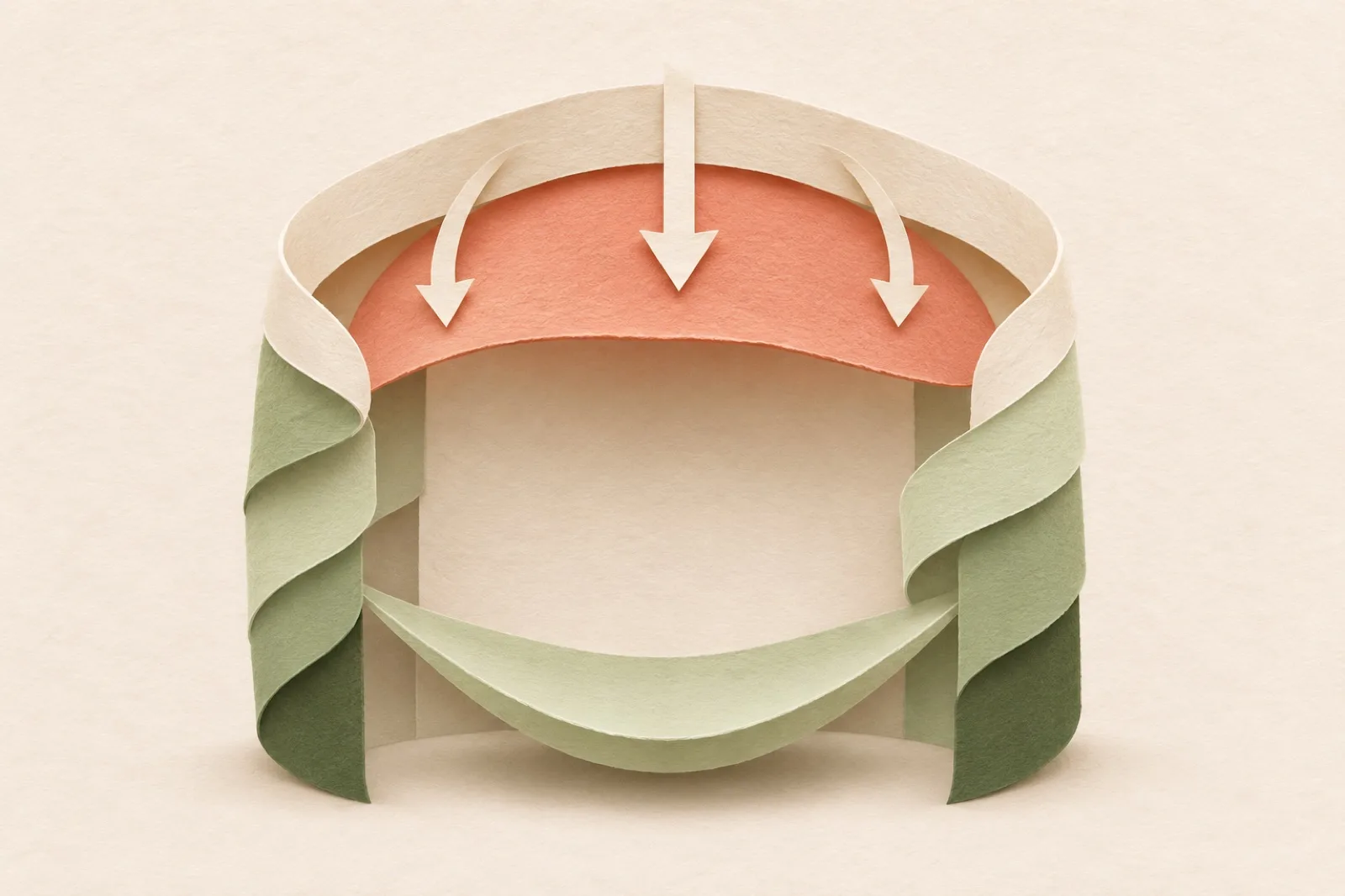
These parts don't work one at a time. They manage pressure together. When you lift a toddler, sneeze, laugh or stand up from the floor, the pressure inside the canister changes. When the lid, base and walls respond as a team, that pressure is shared and supported. When one part is late or overloaded, the team doesn't share the work as well. That's a teaching picture, not a proven mechanism, but I find it useful. Some women notice leaking, others a feeling of heaviness down below, a belly that domes when they sit up, or a back that complains. Those are reasons to get assessed, not things to guess about.
How does breathing affect your pelvic floor?
Here's the part most people have never heard: your pelvic floor moves with your breath.
When you inhale, your diaphragm lowers to make room for air, and your pelvic floor lowers and softens a little too, like a trampoline taking weight. When you exhale, the diaphragm rises and the pelvic floor gently lifts back up. A small MRI pilot study of eight healthy women who had never given birth showed the two moving in parallel: down together on the inhale and up together on the exhale, including during coughing.
Another small lab study found that pelvic floor muscle activity rises mainly on the exhale, and that the pelvic floor switches on a split second before you even lift your arm, as part of how your body gets ready to move. In other words, your pelvic floor isn't just a "hold it in" muscle. It's part of your breathing and your posture, all day long.
That's why breathing is my starting point. If the lid and the base can move together, you have something real to build on.
How does pregnancy change your ribs and breathing?
Pregnancy changes the canister in big ways. As the uterus grows, the resting position of the diaphragm moves up, by about 5 centimeters according to a review in the respiratory journal Breathe. To make room, the rib cage widens. The angle where your lower ribs meet at the front opens from an average of about 68 degrees early in pregnancy to about 104 degrees at term. Meanwhile your belly wall stretches and your center of gravity shifts.
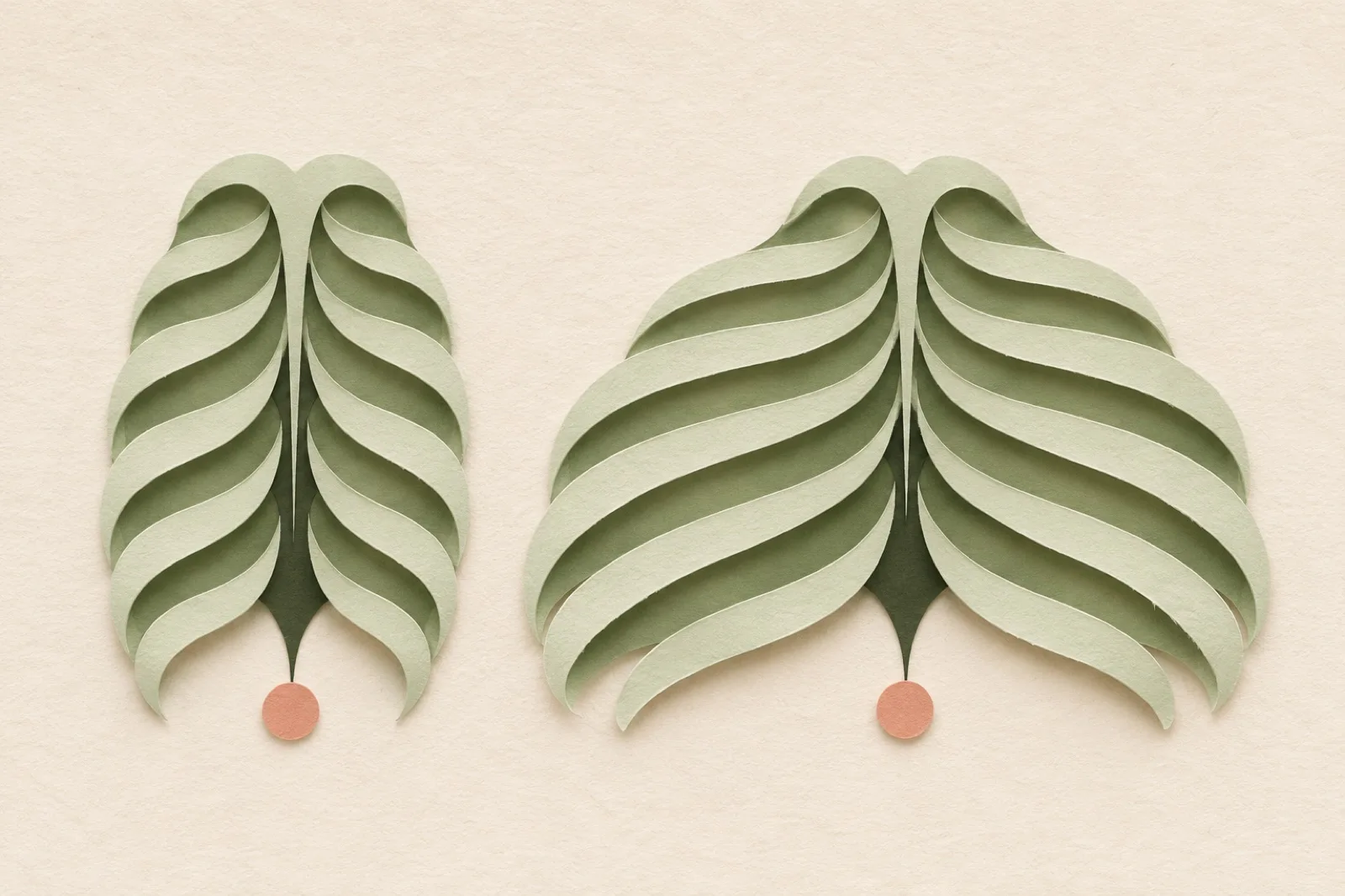
Your body is brilliant at adapting. It found a way to keep you breathing and moving while growing a whole human. But months of adapting can leave habits behind: breathing mostly into the upper chest, ribs that stay flared, a belly or pelvic floor that holds tension all the time, or one that has a hard time engaging at all.
Even years after you became a mom, those habits can keep running quietly in the background. The good news is that you get to practice breathing many times a minute, every day, for free.
360 breathing, step by step
"360" means you breathe into the whole canister: front, sides and back. Not just the belly, not just the chest.
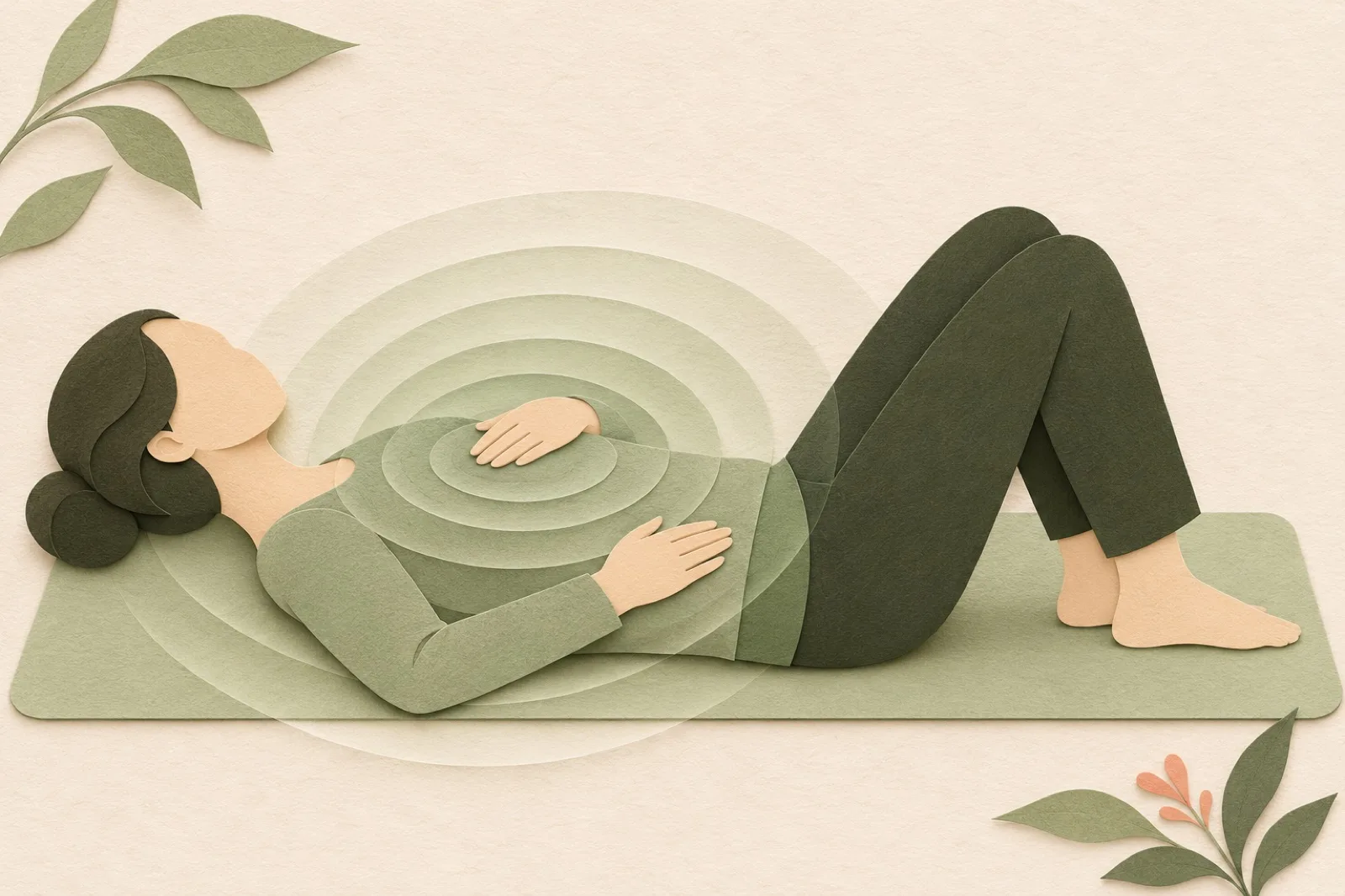
Try this: Lie on your back with your knees bent, feet flat and your head supported. Place your hands on the sides of your lower ribs, thumbs toward your back. Inhale slowly through your nose and imagine your ribs widening into your hands, like an umbrella opening, and your back spreading into the floor. Let your belly rise softly and let your pelvic floor relax and lower, without pushing down. Then exhale through soft lips, as if slowly fogging a mirror. Feel your ribs draw gently back in, and notice your pelvic floor and lower belly lift and draw in a little, on their own or with a gentle assist. No gripping, no forcing. Repeat for 5 to 10 slow breaths. If you feel dizzy, pause and breathe normally. If you feel pain, leaking that gets worse, heaviness or bulging in your vagina, or any bleeding, stop and talk to a health professional.
Try it once or twice a day for a few minutes. It might feel awkward at first, and that's fine. You're re-teaching a pattern, not passing a test.
Should you do crunches and planks after pregnancy?
Let me be fair to crunches and planks. They aren't evil, and they aren't banned forever. The research on which abdominal exercises work best after pregnancy, and when, is still evolving, and the honest answer is that it depends on you.
Here's how I think about it. A crunch or a plank asks the whole canister to work as a team under effort. The pressure itself isn't dramatic: in one study, a crunch raised the pressure inside the belly no more than getting up out of a chair did, and researchers still don't know exactly how that pressure affects the pelvic floor. So my reason isn't fear of pressure. It's order. If the lid and the base don't yet move with your breath, a harder exercise just gives you more to coordinate before the basics are there.
So in my work, foundation comes before load. First we learn to breathe into the whole canister and let the pelvic floor move with it. Then we bring that breath into real movements: standing up, squatting, carrying, lifting. Then we build progressive strength from your core outward. Crunches and planks may well be part of that later, if they fit your body and your goals.
Before you start any of this, get medical clearance from your doctor. And if you've noticed leaking, pressure or heaviness down below, or changes along the midline of your belly, an assessment with a pelvic floor physical therapist is a great place to begin. They can assess things a coach can't, and what they find helps shape what you do next.
Key takeaways
- Your core works as a pressure system, with your diaphragm as the lid, your pelvic floor as the base, and your deep abdominals and back muscles as the walls.
- Your pelvic floor moves with your breath: in a small MRI study of women who had never given birth, it lowered with the diaphragm on the inhale and lifted with it on the exhale.
- Pregnancy moves the resting position of the diaphragm up and widens the rib cage, and the breathing habits it leaves behind can keep running years after you became a mom.
- 360 breathing means breathing into the front, sides and back of your trunk, and it's the foundation I build on before harder core work.
- Crunches and planks aren't banned, but the evidence is still evolving and the right timing depends on you, so get medical clearance and, where relevant, an assessment with a pelvic floor physical therapist first.
Frequently asked questions
Is it too late to work on my breathing years after having kids?
No, it isn't too late. Habits left over from pregnancy, like breathing mostly into your upper chest or keeping your ribs flared, can keep running in the background years after you became a mom. The good news is that you practice breathing many times a minute, every day, for free. Start with medical clearance from your doctor, then try a few minutes of 360 breathing, gently and without forcing.
What is 360 breathing?
360 breathing means breathing into your whole trunk, front, sides and back, not just your belly or your chest. Lying on your back with your knees bent, you inhale through your nose and let your ribs widen like an umbrella opening while your pelvic floor relaxes. Then you exhale through soft lips and feel your ribs, lower belly and pelvic floor gently draw back in. If you feel pain, stop and talk to a health professional.
How often should I practice 360 breathing?
I suggest once or twice a day for a few minutes, about 5 to 10 slow breaths at a time. It might feel awkward at first, and that's fine, because you're re-teaching a pattern, not passing a test. If you feel dizzy, pause and breathe normally. If you notice pain, leaking that gets worse, heaviness or bulging in your vagina, or any bleeding, stop and talk to a health professional.
Is breathing really a core exercise?
Yes, in the way I teach it. Your core is a pressure system, and breathing is how its lid, the diaphragm, and its base, the pelvic floor, learn to move together. A small lab study found that pelvic floor activity rises mainly on the exhale and switches on a split second before you lift your arm. So your pelvic floor is part of your breathing and your posture all day, and that's what harder exercises build on.
If this way of thinking about your core makes sense to you, it's the heart of ReConnect Mom. We start with breathing and pressure and build from there, at your pace. Take a look whenever you're ready.
My work is fitness coaching and does not replace medical or physical therapy care. Medical clearance from your doctor is required before starting. Individual results vary.
References
- LoMauro A, Aliverti A — Respiratory physiology of pregnancy (Breathe, 2015). https://pmc.ncbi.nlm.nih.gov/articles/PMC4818213/
- Talasz H, Kremser C, Kofler M, et al. — Phase-locked parallel movement of diaphragm and pelvic floor during breathing and coughing: a dynamic MRI investigation in healthy females (Int Urogynecol J, 2011). https://pubmed.ncbi.nlm.nih.gov/20809211/
- Hodges PW, Sapsford R, Pengel LH — Postural and respiratory functions of the pelvic floor muscles (Neurourol Urodyn, 2007). https://pubmed.ncbi.nlm.nih.gov/17304528/
- Cleveland Clinic — Diaphragmatic Breathing. https://my.clevelandclinic.org/health/articles/9445-diaphragmatic-breathing
- Weir LF, Nygaard IE, Wilken J, Brandt D, Janz KF — Postoperative activity restrictions: any evidence? (Obstetrics & Gynecology, 2006). https://pubmed.ncbi.nlm.nih.gov/16449116/