If you're reading this while your kids are doing homework, arguing about screen time or asking to borrow the car, this one is for you.
Most of what you'll find about postpartum bodies focuses on the first weeks and months. The six-week checkup. The fourth trimester. And then, somehow, the conversation just stops. As if once your baby turns one, whatever happened to your core is either sorted out or simply yours to keep.
I see it differently. Postpartum is forever. Not in a scary way. In the sense that once you become a mom, your body has a story, and that story keeps going. I work with moms whose kids are already teenagers, and I can tell you this: it is not too late to reconnect with your core.
The short answer: It's not too late to work on your core years after having kids. Postpartum doesn't come with an expiration date, and muscle keeps adapting to what you ask of it, at 25 and at 55. Start with medical clearance from your doctor, get an individual assessment with a pelvic floor physical therapist if you notice leaking, heaviness or pelvic pain, and build foundation before load.
Why do core problems still show up years after pregnancy?
Pregnancy changes a lot at once. Your rib cage widens to make room, your belly wall stretches, your pelvic floor carries extra weight for months, and then birth asks even more of your body, whether your baby arrived vaginally or by C-section. I had two very different pregnancies myself.
What often happens next is that life gets loud. You adapt. You learn to carry a toddler on one hip, sleep in strange positions, lift car seats with your back, and hold your breath every time you pick something up. Those habits made sense at the time. Years later, they're still there, even though the toddler now has strong opinions about music.
So if you still feel disconnected from your belly, if your lower back complains after a day on your feet, or if a sneeze makes you cross your legs, none of that means you missed a window. Often it means your body is still running on patterns it learned when you were in survival mode, and patterns are something we can work on. Sometimes there's more to it, which is why I'll keep sending you to your doctor or a pelvic floor physical therapist first.
"Part of being a mom" is a story, not a rule
Leaking when you laugh, cough or jump, a back that aches, a belly that doesn't quite feel like yours: these are common among moms. It's common, but it's not something you have to live with.
I say that gently, because I know how this goes. You mention it to a friend and she laughs and says, "Welcome to motherhood." You decide it's just the price of having kids. And slowly you stop doing things. You skip the trampoline. You pass on the hike. You find the nearest bathroom before the movie even starts.
Those small decisions add up. They shape how much you move, and how at home you feel in your own body. You deserve better information than "that's just how it is."
Can you still build muscle and strength in your 40s and 50s?
Here's the anatomy part, in plain language. Muscle is responsive tissue. It adapts to what you ask of it, at 25 and at 55.
What changes with age is that you have to ask more intentionally. According to Cleveland Clinic, we gradually begin losing muscle mass and strength in our 30s or 40s, and resistance training can help reverse that loss and improve strength. In other words, the years when many of us are busiest with kids are also the years when strength training starts to matter most.
It's not only about muscle. Bone responds to load too. In a randomized trial called LIFTMOR, postmenopausal women with low bone mass, on average in their mid-60s, did supervised, progressive strength and impact training twice a week for eight months. Compared with a gentle home program, they came out ahead on bone density at the spine and hip and did better on everyday function tests, like standing up from a chair. That was a carefully supervised program for a specific group, so it's not a template to copy at home. But it's a strong reminder that the body keeps adapting well past the age most people assume.
And there's a benefit that's harder to put on a chart: confidence. Getting stronger changes how you carry yourself, how you walk into a room, and what you're willing to try.
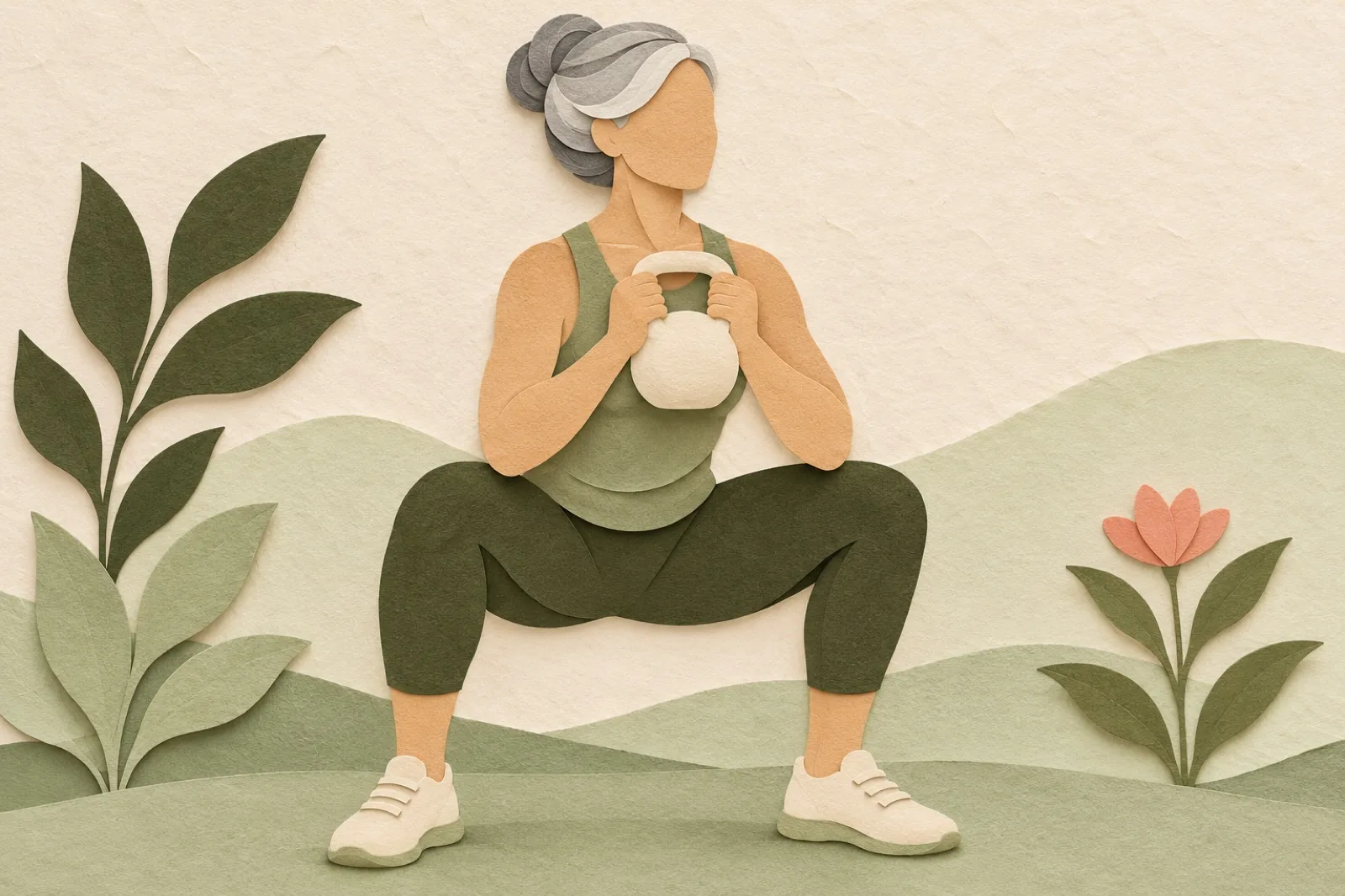
Should you still work on your core during perimenopause and menopause?
If you're in your 40s or 50s, there's another layer. Perimenopause and menopause bring hormonal changes that affect much more than hot flashes.
The NHS lists urinary incontinence, more frequent urinary infections, muscle aches and joint pains, and weakening bones among the possible symptoms. Cleveland Clinic explains that with less estrogen, the vaginal lining can become thinner and less stretchy, and that the newer term genitourinary syndrome of menopause was adopted partly to include the urinary symptoms that can come with it.
So for many women, the changes of menopause stack on top of whatever pregnancy and birth left behind. That can feel discouraging. I see it the other way around. It's one of the best reasons to build strength now, from your core outward, with a pelvic floor that knows how to work with your breath and with the loads of your day.
The hormonal side of this is a conversation for your doctor, and it's worth having. My part is the movement: helping your core and pelvic floor coordinate, then building real-life strength on top of that foundation.
Measure what you get back
A lot of us were taught to judge progress by the mirror or the scale. Your body is allowed to look different now. It's a different body, and it can be even stronger.
I'd love for you to track something else: how you feel, and what you get back to doing. Can you sit on the floor with your kids and get up without grabbing the couch? Carry all the groceries in one trip without your back paying for it later? Laugh at a joke without bracing first? Those are wins, and they count.
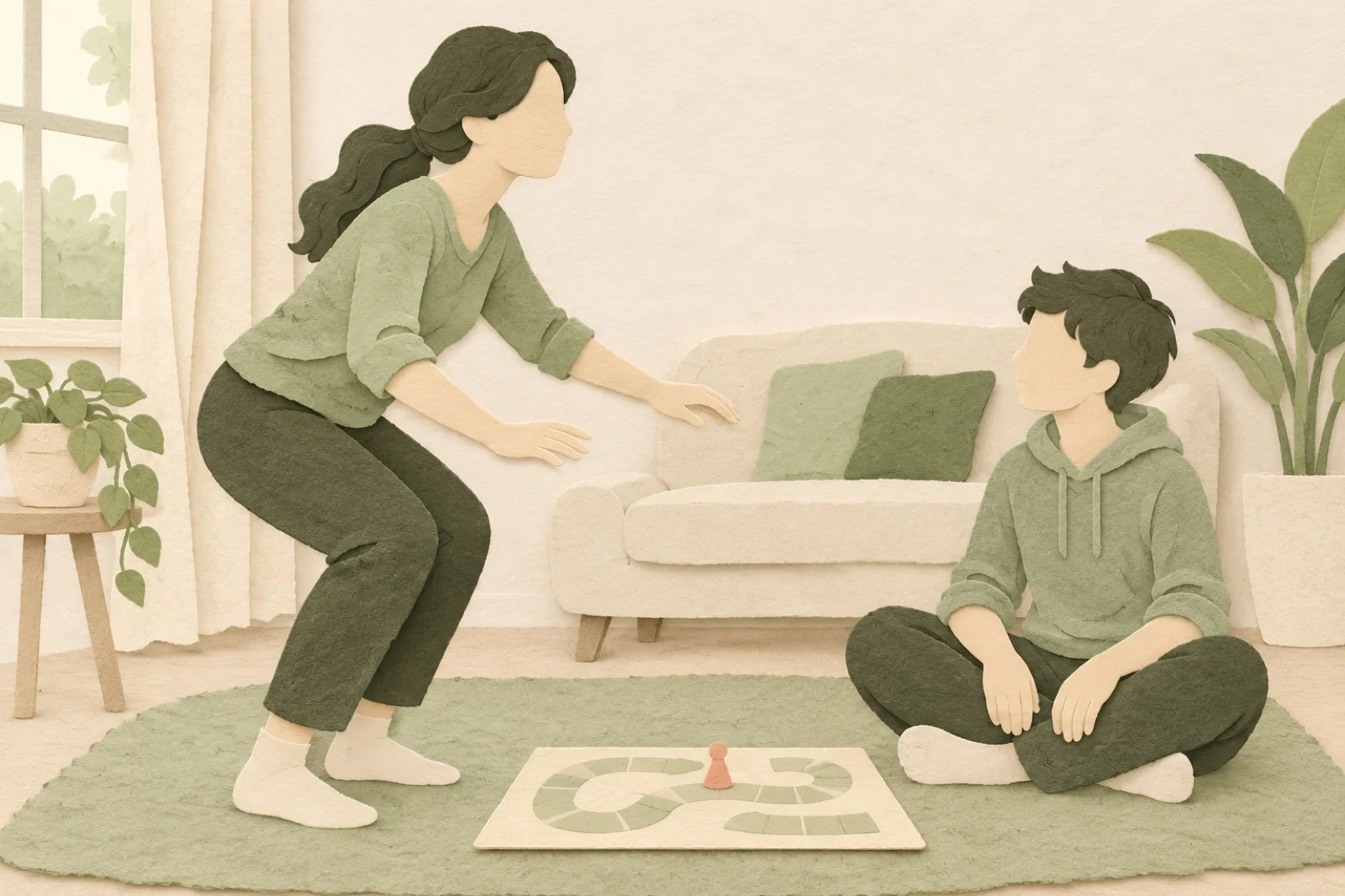
Try this: Grab a notebook or the notes app on your phone and write down three everyday tasks you want to feel confident doing again. Make them specific and real. For example: playing on the floor and getting up easily, carrying the groceries in from the car, jumping on the trampoline with your kids. Date the page. In a few months, come back and check in with yourself. Did any of them get easier? That's your progress, in your own language.
Where to start, at any age
Start with the basics that keep you safe. Get medical clearance from your doctor before you begin a new exercise program. If you notice leaking, heaviness or pelvic pain, an individual assessment with a pelvic floor physical therapist is a great first step, no matter how old your kids are.
Then build in order: foundation before load. That usually means learning to breathe in a way that lets your ribs and belly move, stacking your ribs over your pelvis, and coordinating your core and pelvic floor during simple movements. Then we add the patterns real life asks for, like squatting, getting up from the floor, carrying, pushing and pulling, and make them progressively stronger.
Listen to your body along the way. If you feel pain, leaking that gets worse, a feeling of heaviness or bulging in the vagina, or any bleeding, stop and talk to a health professional before you continue.
Key takeaways
- Postpartum doesn't come with an expiration date, so it's not too late to reconnect with your core, even if your kids are teenagers.
- Leaking, an aching back or a belly that doesn't feel like yours are common among moms, but they're not something you have to live with.
- Muscle adapts to what you ask of it at any age, and resistance training can help reverse the gradual muscle loss that begins in our 30s or 40s.
- Perimenopause and menopause can bring changes such as urinary incontinence and weakening bones, which makes building strength from your core outward a reason to start, not to stop.
- Start with medical clearance from your doctor, see a pelvic floor physical therapist if you notice leaking, heaviness or pelvic pain, and build foundation before load.
Frequently asked questions
Is it too late to work on my core 10 years after having kids?
No, it's not too late. Postpartum doesn't come with an expiration date, and muscle is responsive tissue that keeps adapting to what you ask of it. What matters is starting safely: get medical clearance from your doctor first, and if you notice leaking, heaviness or pelvic pain, an individual assessment with a pelvic floor physical therapist is a great first step.
Is leaking when I laugh or sneeze just part of being a mom?
Leaking when you laugh, cough or jump is common among moms, but it's not something you have to live with. Often it reflects patterns your body learned in survival mode, and sometimes there's more to it. That's why the first step is talking with your doctor or a pelvic floor physical therapist for an individual assessment.
What changes can menopause bring for my bladder and pelvic health?
Menopause brings hormonal changes that affect much more than hot flashes. The NHS lists urinary incontinence, more frequent urinary infections, muscle aches, joint pains and weakening bones among the possible symptoms. Cleveland Clinic explains that with less estrogen, the vaginal lining can become thinner and less stretchy. The hormonal side of this is a conversation for your doctor, and it's worth having.
How can I track core progress without the scale or the mirror?
Track what you get back to doing. Write down three specific everyday tasks you want to feel confident doing again, like getting up from the floor without grabbing the couch or carrying the groceries in one trip, and date the page. Check back in a few months. If any of them got easier, that's your progress, in your own language.
If you'd like a first step that takes two minutes and no gym clothes, try my quiz. It asks how at home you feel in your body, and your answers show you where to begin.
My work is fitness coaching and does not replace medical or physical therapy care. Medical clearance from your doctor is required before starting. Individual results vary.
References
- Cleveland Clinic — Sarcopenia (Muscle Loss): Symptoms & Causes. https://my.clevelandclinic.org/health/diseases/23167-sarcopenia
- Watson SL, Weeks BK, Weis LJ, Harding AT, Horan SA, Beck BR — High-Intensity Resistance and Impact Training Improves Bone Mineral Density and Physical Function in Postmenopausal Women With Osteopenia and Osteoporosis: The LIFTMOR Randomized Controlled Trial (J Bone Miner Res, 2018). https://pubmed.ncbi.nlm.nih.gov/28975661/
- NHS — Symptoms of menopause and perimenopause. https://www.nhs.uk/conditions/menopause-and-perimenopause/symptoms/
- Cleveland Clinic — Vaginal Atrophy (Genitourinary Syndrome of Menopause). https://my.clevelandclinic.org/health/diseases/15500-vaginal-atrophy