
Here is what a mom's day really looks like: you pick things up. Constantly. A toddler who has decided legs are optional. A car seat that seems to gain weight every month. The laundry basket. The grocery bags you insist on carrying in one trip, because two trips are for quitters.
None of that looks like a workout on paper. But your body doesn't know it isn't one. Every one of those lifts asks your core and your pelvic floor to do a job, and how you breathe while you do it changes how that job feels.
The short answer: To lift your kids without pushing down on your core, breathe in to get ready, then lift during a slow exhale instead of holding your breath and bearing down. Hinge or squat, keep the load close and switch sides. The research is still evolving, so get medical clearance first, and if lifting brings pain, leaking or heaviness, get assessed by a pelvic floor physical therapist.
What happens to your core and pelvic floor when you hold your breath to lift?
Here's my one anatomy concept for today. Picture your trunk as a canister. Your diaphragm is the lid, your pelvic floor is the base, and your deep abdominal muscles wrap around the sides. When you lift something, the pressure inside that canister goes up. That isn't bad. Pressure is part of how your trunk stays stable.
The trouble starts when that pressure has nowhere to go but down and out. If you take a big breath, lock it in and bear down (which a lot of us do without noticing when we hoist a toddler), you can feel the push go into your belly and toward your pelvic floor. Some moms notice it as a bulge along the middle of the belly, a little leak, or a feeling of heaviness down below.
In one study that measured abdominal pressure in women during 16 different exercises, the highest average pressure didn't come from any of the exercises. It came from a deliberate seated strain: the classic hold-your-breath-and-push move.
Does breathing out when you lift actually help your pelvic floor?
I'm not going to pretend this is all settled. A study of more than 200 first-time moms, measured 6 to 10 weeks after a vaginal birth while they lifted a weighted car seat, did not find that breath holding or lifting technique changed their peak pressure. What did make a difference was how long the lift took. Longer lifts, higher peaks.
So is the breathing advice a myth? I don't think so. I think it's about coordination more than a magic pressure number. The researchers themselves say we don't yet know exactly how this pressure affects pelvic floor health, and other work from the same group suggests the answer is individual: what is a lot for one body is easy for another.
What we do know is that timing can help. In a small study of older women with mild to moderate stress incontinence, learning to contract the pelvic floor just before and during a cough (they called it "The Knack") reduced leakage within a week. Lifting isn't coughing, but the idea carries over: switch your support system on before the effort, not halfway through it.
That's what I teach. Not because breathing out is a force field, but because it helps you stop bracing against yourself and lets your core and pelvic floor work as a team.
Blow before you go
The cue you'll often hear is "blow before you go." Here's what it looks like:
- Get set. Step close to what you're lifting and breathe in gently through your nose, letting your ribs and belly expand.
- Start a slow exhale through pursed lips, like blowing through a straw.
- As the exhale begins, notice your lower belly gently drawing in. If a pelvic floor physical therapist has taught you to lift your pelvic floor, add that here. Gentle, not a clench.
- Lift during the exhale. Then go back to breathing normally.

Where this matters in real mom life:
- Lifting the car seat in and out of the car (plus the awkward twist that comes with it)
- Carrying grocery bags from the trunk to the kitchen
- Picking the laundry basket up off the floor
- Scooping your toddler off the floor, out of the crib or out of the bath
- Wrestling the stroller into the trunk
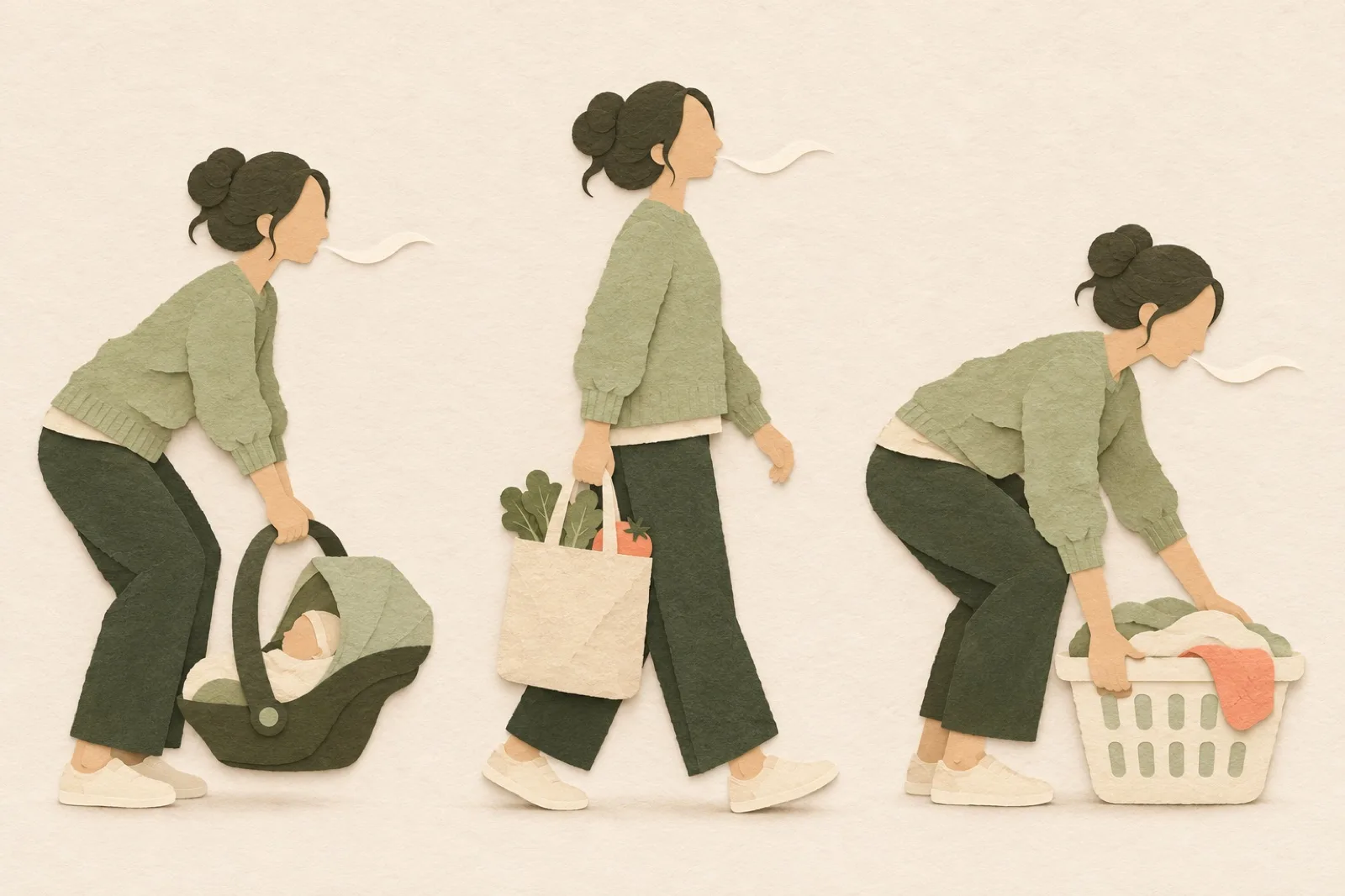
You don't need to do this for every sock you pick up. Save it for the lifts that make you grunt.
Hinge, squat, keep it close, switch sides
Breath is half the story. How you move is the other half.
Hinge or squat instead of folding. For a hip hinge, send your hips back like you're closing a car door with your butt, keep your spine long and let your knees soften. For something low and heavy, like a kid sitting on the rug, bend your knees and squat down to get closer. One NHS postnatal leaflet puts it simply: bend your knees and keep your back straight when lifting.
Keep the load close. The farther something is from your body, the heavier it acts. Pull your toddler into your chest before you stand up. Step into the car door instead of reaching across the back seat. That same leaflet suggests keeping your baby close when moving them in and out of the car seat, and carrying the seat in front of you rather than on your hip, or clicking it onto the stroller frame.
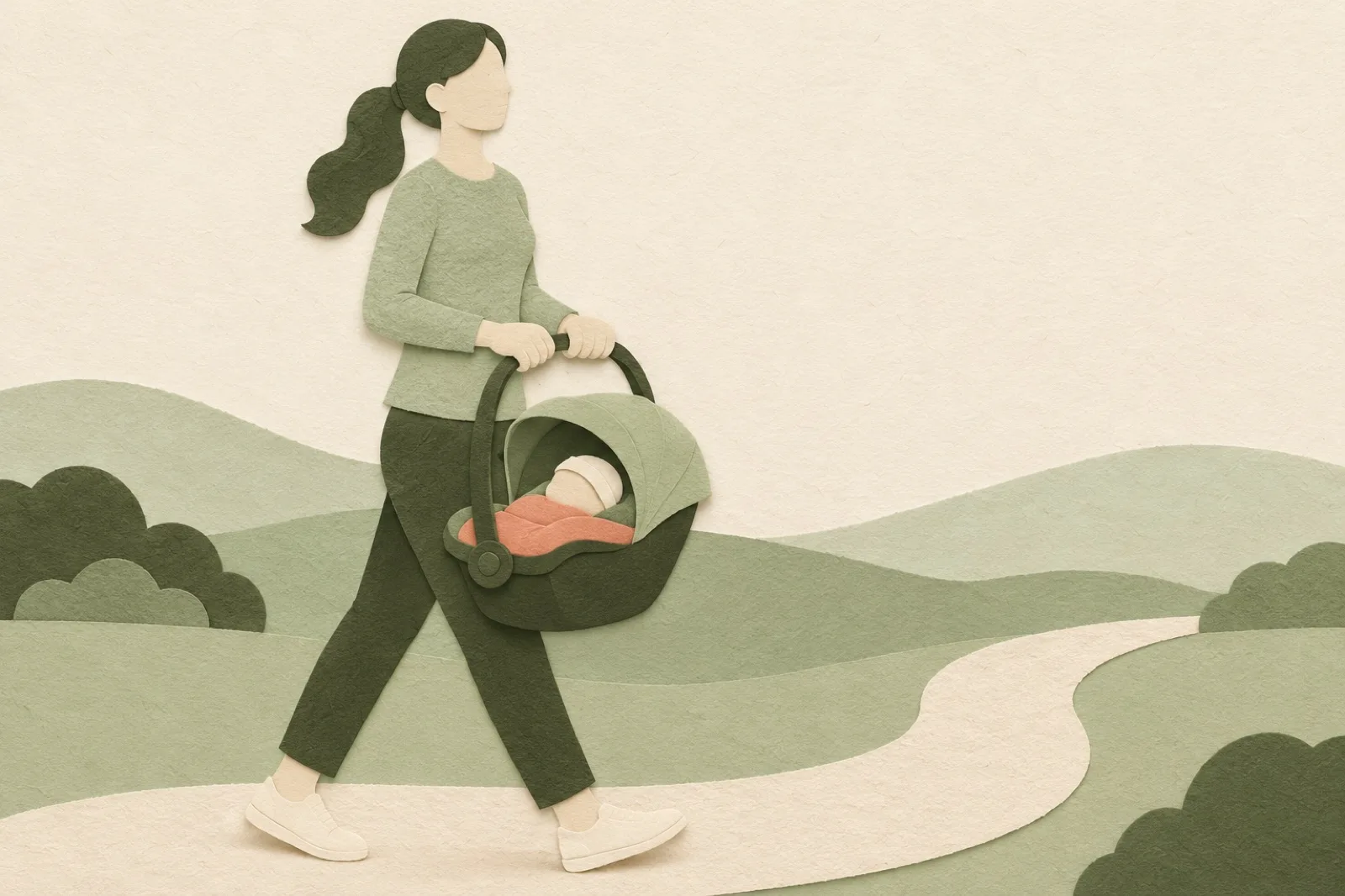
Switch sides. Your toddler wants to live on your left hip. I get it. When you can, carry in front. When a one-sided carry can't be avoided, like a heavy grocery bag or a kid who refuses to be put down, split the load between both hands or switch sides often so one side isn't doing all the work.
Keep it short, when you can. In that car seat study, longer lifts went with higher peak pressure. That's one association from one test, not a rule, but it matches common sense: plan the lift, do it, put it down. Find your keys before you pick up the car seat.
Try this: The next 5 times you lift your kid, exhale as you lift. Breathe in to get ready, start blowing out, then pick them up. Notice whether your belly and pelvic floor feel different than when you hold your breath. That's it. No equipment, no extra time, and your kid gets lifted either way.
When should you stop and get assessed?
Before you start any new exercise, get medical clearance from your doctor. If you notice pain, leaking that gets worse, a feeling of heaviness or bulging in the vagina, or bleeding, stop and talk to a health professional. A pelvic floor physical therapist can do an individual assessment and tell you what your body needs, which is something no blog post can do.
If you leak when you lift, or you see a dome rise down the middle of your belly when you sit up: it's common, but it's not something you have to live with. Plenty of moms notice these things years after their last baby, even when the kids are teenagers. It's never too late to learn to lift with your body instead of against it.
Key takeaways
- Holding your breath and bearing down during a lift can push pressure down toward your belly and pelvic floor, and some moms feel that as a bulge, a leak or heaviness.
- The research is still evolving: in one study of first-time moms lifting a car seat, breath holding didn't change peak pressure, but longer lifts went with higher peaks.
- "Blow before you go" means breathing in to get set, then lifting during a slow exhale so your core and pelvic floor work as a team.
- Hinging or squatting, keeping the load close, carrying in front and switching sides help spread the work of everyday lifts.
- Get medical clearance before any new exercise, and stop and talk to a health professional if you notice pain, leaking that gets worse, heaviness or bulging in the vagina, or bleeding.
Frequently asked questions
Should I exhale when I lift my baby or toddler?
For most everyday lifts, a gentle exhale is a useful habit to practice. Breathe in to get set, start a slow exhale, and lift during the exhale. Research hasn't shown that exhaling lowers peak pressure, but it helps you stop bracing against yourself and switch your support on before the effort. If lifting brings pain, leaking or heaviness, talk to a pelvic floor physical therapist.
Does holding my breath when I lift a car seat push down on my pelvic floor?
It can, but the research is mixed. A big held breath and a bear-down can send pressure down toward your belly and pelvic floor. Yet in a study of first-time moms lifting a weighted car seat 6 to 10 weeks after a vaginal birth, breath holding didn't change their peak pressure; how long the lift took did. Plan the lift, keep it short, and get assessed if you notice leaking or heaviness.
How should I carry a car seat after having a baby?
Carry the car seat in front of your body rather than on your hip, or click it onto the stroller frame so you carry it less. An NHS postnatal leaflet suggests both, along with keeping your baby close as you move them in and out of the seat. Exhale as you lift and keep the carry short. Stop and talk to a health professional if it causes pain, heaviness or bleeding.
Is it too late to change how I lift if my kids are already teenagers?
No, it's never too late to learn to lift with your body instead of against it. Plenty of moms notice leaking when they lift, or a dome down the middle of the belly when they sit up, years after their last baby. It's common, but it's not something you have to live with. Get medical clearance first, and a pelvic floor physical therapist can do an individual assessment.
If you're curious where you're starting from, I made a 2-minute quiz around one honest question: how at home do you feel in your body? Take it whenever you have a quiet moment. No pressure, pun intended.
My work is fitness coaching and does not replace medical or physical therapy care. Medical clearance from your doctor is required before starting. Individual results vary.
References
- Hsu Y, Hitchcock R, Niederauer S, Nygaard IE, Shaw JM, Sheng X — Variables Affecting Intra-abdominal Pressure During Lifting in the Early Postpartum Period (Female Pelvic Medicine & Reconstructive Surgery, 2018). https://pubmed.ncbi.nlm.nih.gov/28727649/
- Dietze-Hermosa M, Hitchcock R, Nygaard IE, Shaw JM — Intra-abdominal Pressure and Pelvic Floor Health: Should We Be Thinking About This Relationship Differently? (Female Pelvic Medicine & Reconstructive Surgery, 2020). https://pubmed.ncbi.nlm.nih.gov/32574030/
- Miller JM, Ashton-Miller JA, DeLancey JO — A pelvic muscle precontraction can reduce cough-related urine loss in selected women with mild SUI (Journal of the American Geriatrics Society, 1998). https://pubmed.ncbi.nlm.nih.gov/9670874/
- Gloucestershire Hospitals NHS Foundation Trust — Postnatal exercises. https://www.gloshospitals.nhs.uk/your-visit/patient-information-leaflets/postnatal-exercises/